Innovation Procurement, Intellectual Property and Supplier Security
How the proposed rules could reshape ownership of newly developed technologies, investment decisions and the management of commercial and security risks.
In this briefing
Introduction
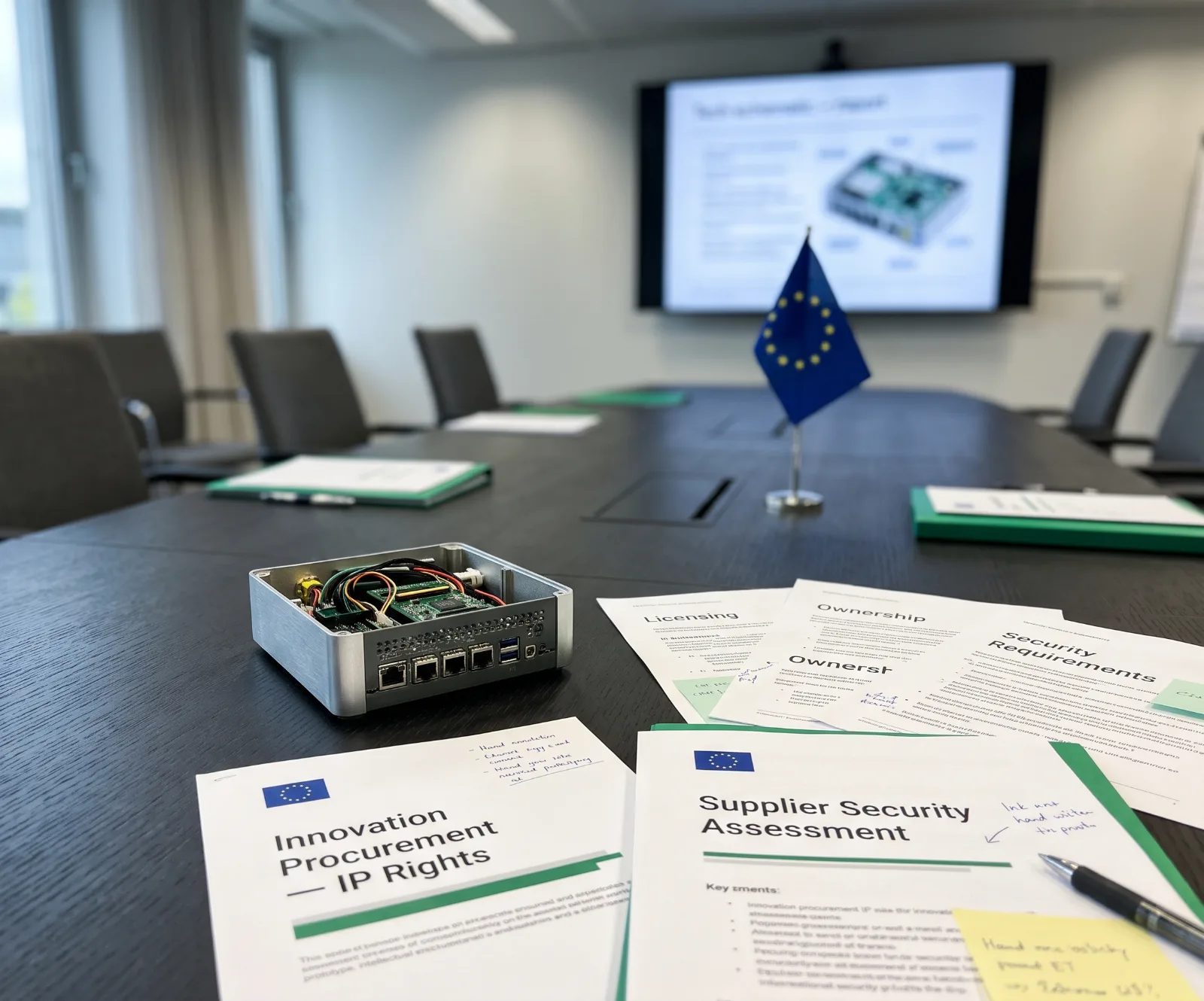
Chapters 3 and 4 of Title II sit next to each other for a reason. Innovation procurement is about persuading a market to bring its best, least proven ideas to a public buyer. Security and resilience is about the public buyer protecting itself from exactly the kind of dependency that comes from trusting an unproven or unfamiliar supplier with something critical. The 2014 directives touch both themes lightly and separately. This proposal gives each one a dedicated chapter, and — for the first time — a formal set of rules about who ends up owning the intellectual property that gets created in between.
Innovation in Public Procurement
Article 59 sets out three objectives a buyer may pursue when it invokes innovation procurement: getting research results out of the lab and into the market while pulling start-ups, scale-ups and SMEs into that process; building lead markets in strategic sectors, explicitly including interoperability and open-source elements in digital public services; and improving cost-effectiveness against conventional alternatives without giving up quality or scale1. Article 60 then adds a reporting obligation with real teeth: a buyer has to formally classify a procurement as public procurement of innovation, in the public summary itself, wherever the object of the purchase is a solution with genuinely new characteristics compared with what is already commercially available at scale — and must do so automatically wherever a contract follows a successful innovation procedure, or where an open procedure purchase follows pre-commercial procurement1. This reporting requirement would enable the Commission to use procurement data…
Continue reading, free
Enter your email and we will send a 6-digit code to open the rest of this briefing.
Confirm your email to read briefings in full. No password or account needed. You’ll also receive a digest of new releases. Unsubscribe at any time; we never sell or share your information. Privacy notice
This briefing reflects the author's analysis and understanding of the market, based on professional experience and information available at the time of publication. It is provided for information and discussion and is not legal, financial, investment or other professional advice. Full disclaimer.