Transportation & Logistics
Patients, Specimens and Fleets, and the Journeys Between Them
Non-emergency patient transport in England is estimated at about £460m a year, at roughly £38 per journey, according to Find a Tender. Procurements are growing in scale: a North West England procurement across several Integrated Care Boards (ICBs) carries an estimated value of £468m, according to Tender Tracker. Fleet markets follow different signals: the British Vehicle Rental and Leasing Association (BVRLA) recorded 2.14 million leased cars and vans in the second quarter of 2026, up 9.6%, a figure for the whole leased fleet, not corporate fleets alone.

 Healthcare Logistics: Procurement Strategy, Contract Costs and Supplier PerformanceAn examination of distribution costs, supplier responsibilities, financial exposure and the commercial economics of outsourced healthcare logistics.
 UK Healthcare Cold Chain: Market Demand, Specialist Infrastructure and Distribution EconomicsFrom Pharma to vaccines to biologics, how temperature-sensitive products shape investment, competition and commercial risks across healthcare markets
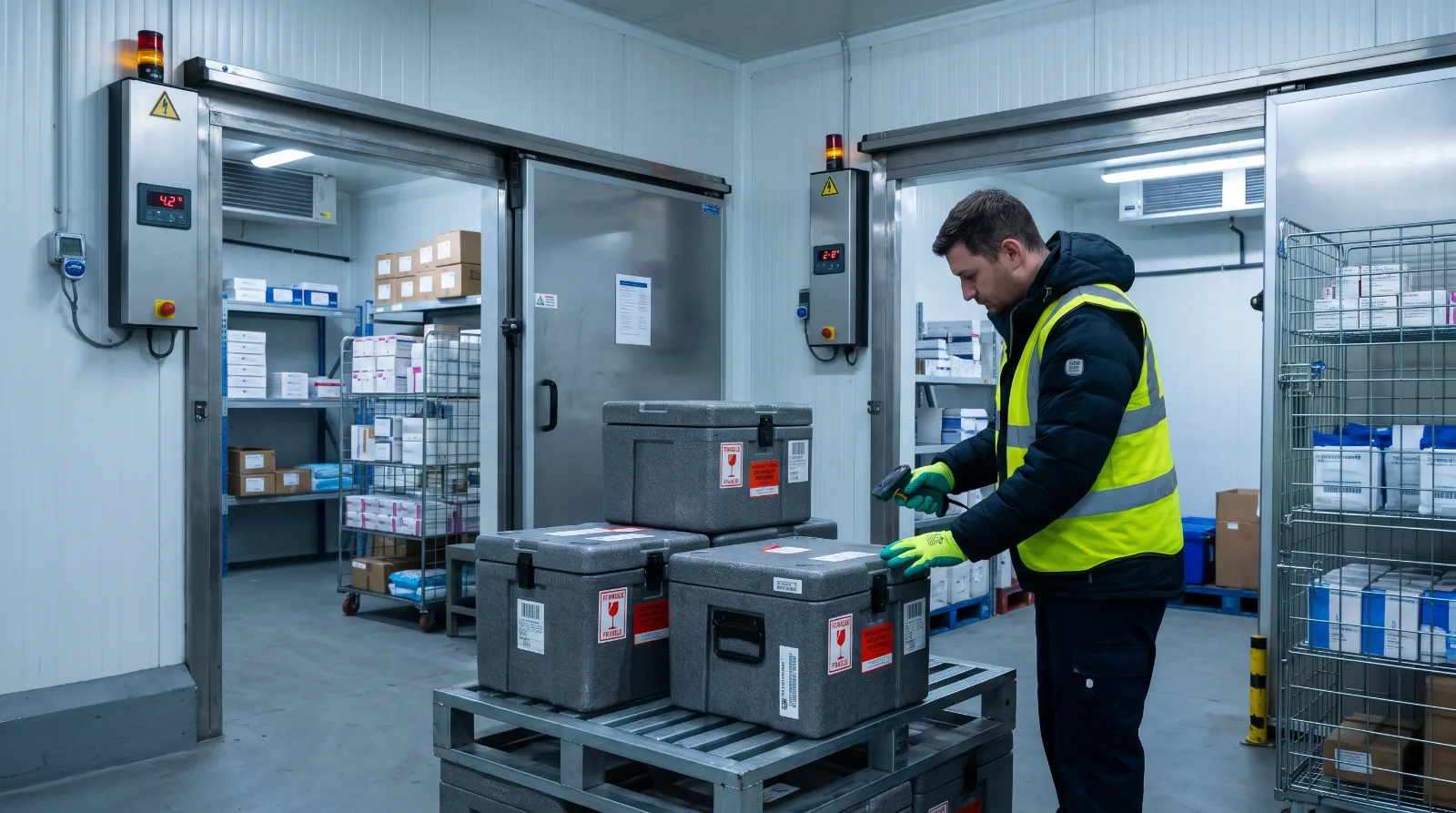 UK Healthcare Logistics: Specialist Clinical and Time-Critical DistributionUK specialist clinical transport for specimens, blood and controlled material: market structure, suppliers, service costs and procurement
 UK Healthcare Logistics: Market Structure, Distribution Networks and DemandExamining market architecture, demand drivers, and the commercial distribution models that govern operating costs, capital investment, and supplier margin
 Healthcare Logistics: The Economics Behind the DeliveryFrom hospital supply networks to specialist clinical transport and cold chain, the costs, competition and commercial decisions shaping a complex UK market
 Whoever the Nurse Names: The Commercial Architecture Behind NHS Home DeliveryA carton arrives at a front door in Bolton. Inside it, a month of stoma pouches, a few boxes of catheters, some skin-barrier wipes, and folded in alongside them, the patient’s blood-pressure tablets.
What our briefings cover
Patient Transport. Non-Emergency Patient Transport Services (NEPTS), high-acuity transfers, emergency ambulance support and bariatric transit.
Specialist Healthcare Logistics. Pathology and specimen couriers under UN3373 rules (the transport standard for biological substances), urgent blood and tissue transport, decontamination logistics and medical gas delivery.
Home Delivery. Homecare medicines, stoma and continence appliances, home parenteral nutrition and oxygen. NHS England homecare medicines and services were reported at £2.985bn in 2023/24, which covers the medicines themselves as well as delivery.
Fleet, Taxi and Freight. Corporate fleets, managed taxi frameworks, telematics, accessible minibuses and, where relevant, general freight and parcels.


The commercial reality: demand, coordination and contract length
Contracts are lengthening: Suffolk and North East Essex ICB awarded a ten-year contract valued at £123m from April 2026, as five years with a five-year extension. Urgent awards under the Provider Selection Regime (PSR) are also used where timelines are tight. Changing provider involves crew transfer, vehicles, booking systems and patient hubs. Electric fleet plans depend on charging infrastructure and payload matched to real duty cycles.

Our briefings treat this page as a map of different markets sharing one road network. Patient transport is consolidating: in April 2026 Health Transportation Group UK acquired First Care Ambulance, which runs the non-emergency patient transport contract for Devon, according to North Devon Gazette. We follow the PSR and zero-emission vehicle rules, investor interest in specialist logistics, how frameworks and ICB purchasing shape the market, and how performance measures and competition affect value for money.
Last updated by Ajay Channana for Ipso Facto on 16 October 2026