Professional Services
Advice Is Bought on Trust and Measured With Difficulty
The industry is forecast to keep growing: the Management Consultancies Association (MCA) forecasts UK consulting revenue growth of 6% in 2026 and 8% in 2027. That covers the whole industry, not only public sector work. In government the picture differs. HM Treasury estimated central government consultancy at £1.36bn in 2022-23, with other estimates from £1.34bn to £2.23bn, according to the Public Accounts Committee, and Tussell put whole public sector consultancy at about £3.4bn in 2023-24. Government has set out to halve consultancy spend, and cut the value of its main framework from £5.7bn over four years to £1.7bn over two.

 The Economics of Procurement Reform: Costs, Savings and ImplementationExamining the financial assumptions behind procurement reform, the investment required for implementation and how its benefits could be measured over time
 Digital Procurement, Supplier Verification and Data TransparencyHow interconnected procurement systems, automated supplier verification and shared data could reduce administrative costs, improve market transparency and strengthen procurement oversight
 Framework Agreements, Contract Modifications and TerminationRevised rules on framework duration and contract variations and their impact on commercial flexibility, SRM and Contract Management
 Evaluating Value: Quality, Cost and Competition in Public ProcurementExamining the commercial implications of mandatory quality weightings, whole-life costs and greater opportunities for smaller suppliers.
 Sustainable Procurement: Environmental and Social RequirementsSustainability obligations, accessibility and social value requirements: Impact on tender specifications, supplier evaluation and
 Innovation Procurement, Intellectual Property and Supplier SecurityHow the proposed rules could reshape ownership of newly developed technologies, investment decisions and the management of commercial and security risks.
 Buying European: Supplier Eligibility, Market Access and CompetitionHow European-preference provisions could influence international supplier participation and competition across the EU public procurement market
 EU Procurement Reform: Procedures, Negotiation and Direct AwardsHow changes to procedures could affect competition, supplier participation and procurement strategy.
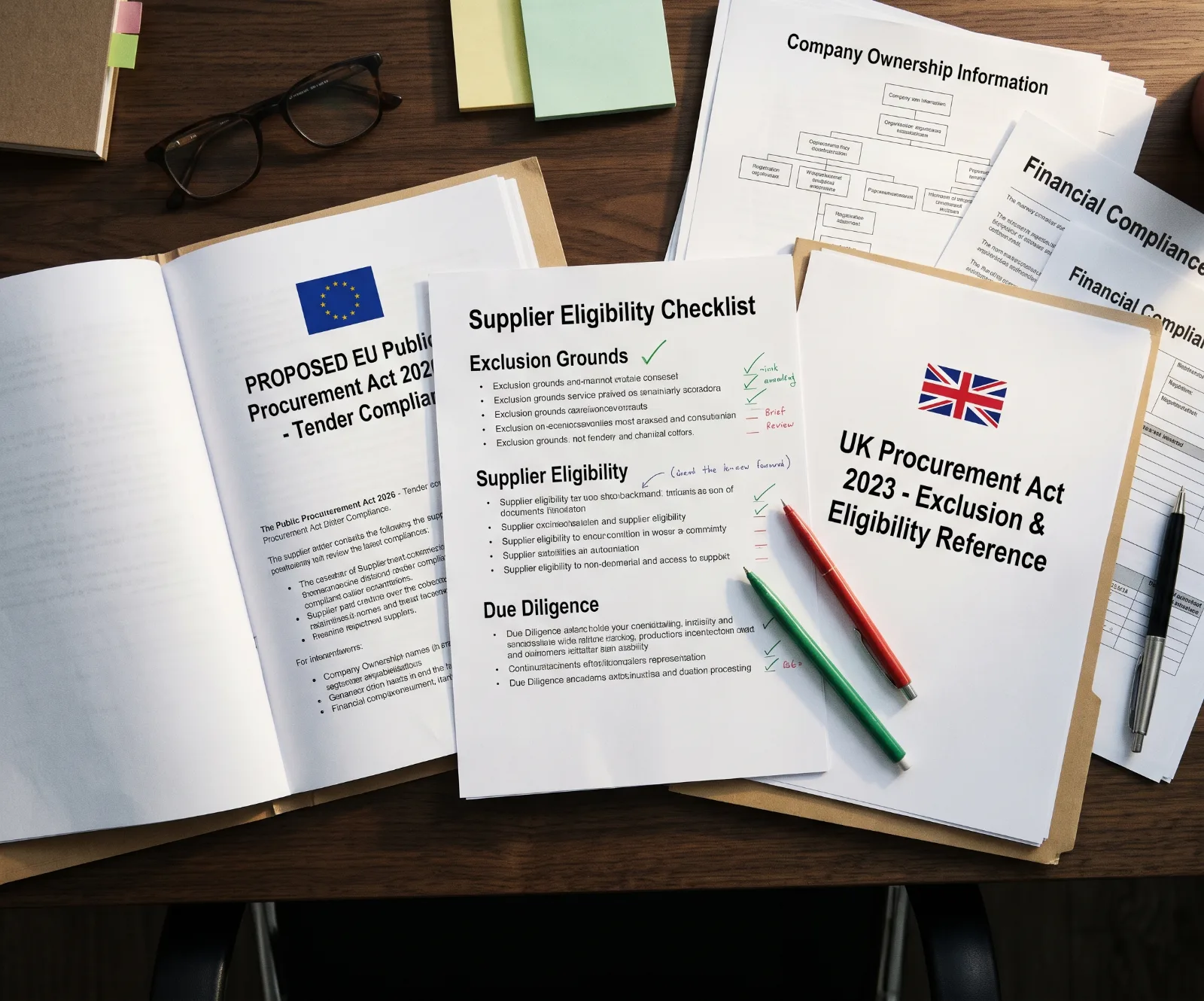 EU Procurement Reform: Supplier Selection and Exclusion CriteriaProposed changes to mandatory and discretionary exclusion grounds, supplier eligibility and financial qualification
 EU Public Procurement Reform 2026: From Three Directives to One RegulationThe proposed single EU Regulation, its implications for public contracts, utilities and concessions, and lessons from the UK Procurement Act 2023
 European Innovation Act: IP Financing and Cross-Border R&DIntellectual property valuation, licensing and investment under the EU's proposed innovation framework
 EU R&D Procurement: Competition, IP Ownership and CommercialisationNew rules for competitive research, supplier ownership of intellectual property and the commercialisation of publicly funded innovation
What our briefings cover
Strategy, Commercial and Operating Model Advice. Target operating models, business cases under the HM Treasury Green Book (the government's guidance for appraising spending), and procurement transformation.
Legal and Regulatory. Procurement and commercial law, property and estates, employment and governance.
Financial, Audit and Assurance. Statutory and internal audit, VAT recovery, the Construction Industry Scheme, actuarial work, and corporate finance and due diligence.
Technical and Construction Consultancy. Quantity surveying, Employer's Agent services, project management under NEC and JCT contracts (standard forms of construction contract), and architectural and engineering design.


The commercial reality: scope is where value is won or lost
Scope changes are the most consistent theme. Some reflect real discovery as work progresses, and some reflect a starting point that was loosely defined. Staffing mix, fee model, ownership of intellectual property and the transfer of knowledge shape value as much as the rate card. Consultancy spend above £600,000, or lasting longer than nine months, now needs ministerial sign-off. Familiar advisers are hard to replace, so continuity itself becomes part of the cost.

Two forces pull in opposite directions in this market, and our briefings follow both: tighter public spending controls on one side, and rising demand for digital, data and AI skills on the other. Ownership is changing too. On 14 July 2026 Grant Thornton UK announced it had bought Fairgrove Partners to add commercial due diligence and strategy consulting, according to Bloomberg Law. We look at consolidation and private equity ownership among advisory firms, how AI changes delivery models, and how fee structures, whether time-based or outcome-linked, perform in practice.
Last updated by Ajay Channana for Ipso Facto on 16 October 2026