Telerobotic Surgery: The Potential to Reshape NHS Investment and Surgical Networks
Could shared surgical infrastructure shorten waiting times, improve patient experience and reduce the need for investment?
In this briefing
- Introduction
- What Changes When the Surgeon Is Remote?
- Regional access: must every hospital own a robot?
- The business case moves beyond the individual robot
- Waiting lists and workforce: a question of capacity
- The emerging supplier and infrastructure market
- Connectivity, clinical safety and contractual responsibility
- Regulation and the route to NHS adoption
- What should NHS organisations do now?
- About the Author
- Frequently Asked Questions
- References
- Disclaimer
Introduction
In February 2026, a surgeon working in London operated on a patient in Gibraltar, roughly 1,500 miles away. In October, a research team in Florida reported a robotic prostatectomy between two US hospitals approximately 35 miles apart. The operations attracted attention for their distances and the speed of their communications. Their longer-term significance may lie elsewhere: the possibility of delivering specialist surgical expertise to a patient without requiring that specialist to be based at the hospital performing the procedure.12
These are early clinical developments, not evidence that remote surgery is ready for routine deployment across the NHS. The Florida procedure took place under an investigational research authorisation, not a general US regulatory approval. Both examples involved the Toumai robotic platform, according to published reporting. The distinction matters: a successful procedure establishes that something can be done under particular conditions, not that it should be commissioned at scale.12
Parts 1–3 of this series examined surgical robotics demand, the commitments trusts make when selecting platforms, the total cost per procedure and the approval and procurement arrangements behind NHS adoption. This concluding briefing asks what could change if specialist surgeons, robotic operating equipment and patients no longer need to be in the same building. It examines the opportunity for regional care, the economics of shared capacity and the additional responsibilities that a remote service would introduce.
What Changes When the Surgeon Is Remote?
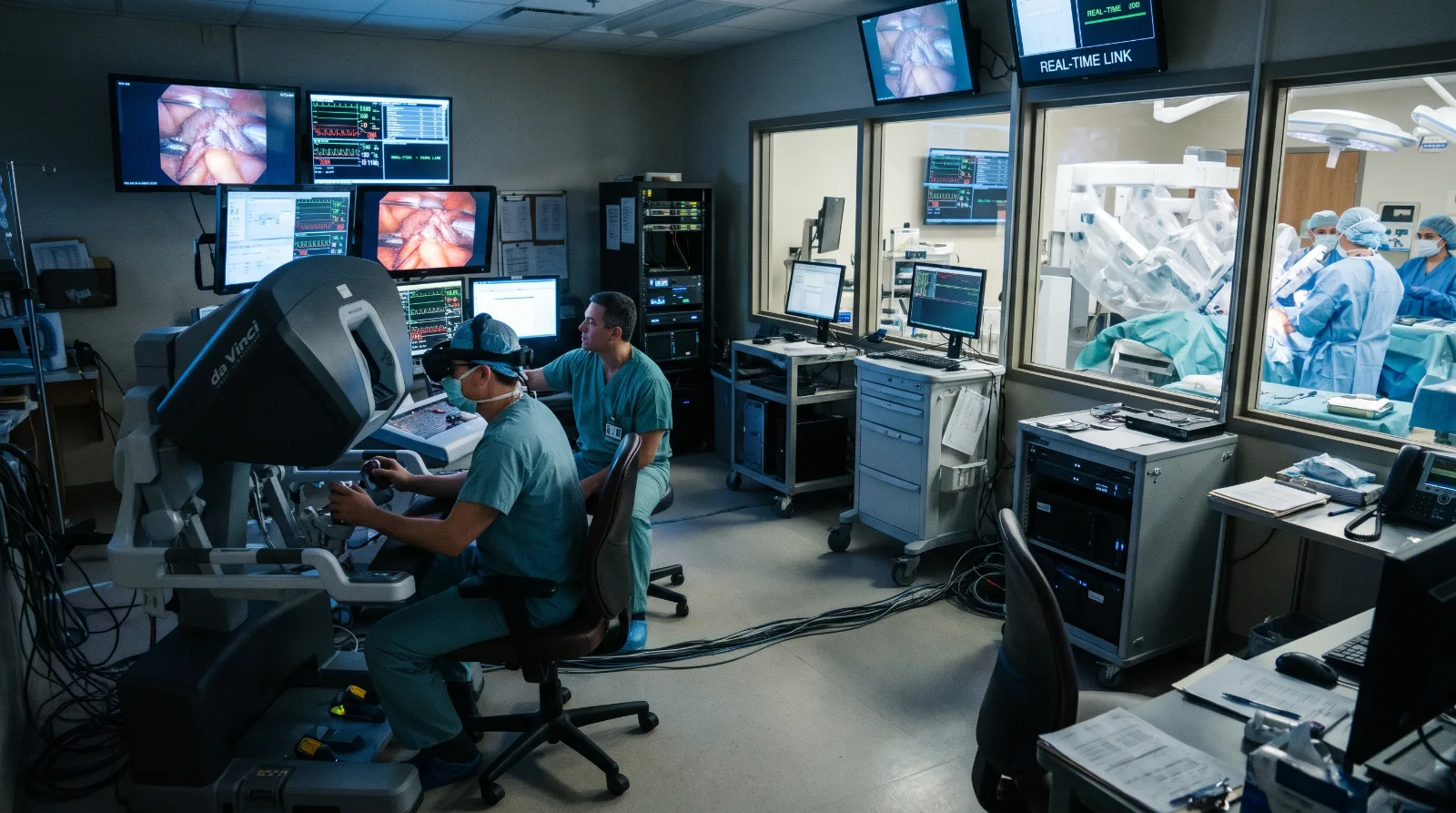
Conventional robot-assisted surgery places the surgeon at a console in or near the operating theatre, with the patient-side robot, anaesthesia team, assistants and other theatre staff alongside…
Continue with membership
The rest of this briefing is available to active CPO Insights members.
This briefing reflects the author's analysis and understanding of the market, based on professional experience and information available at the time of publication. It is provided for information and discussion and is not legal, financial, investment or other professional advice. Full disclaimer.